

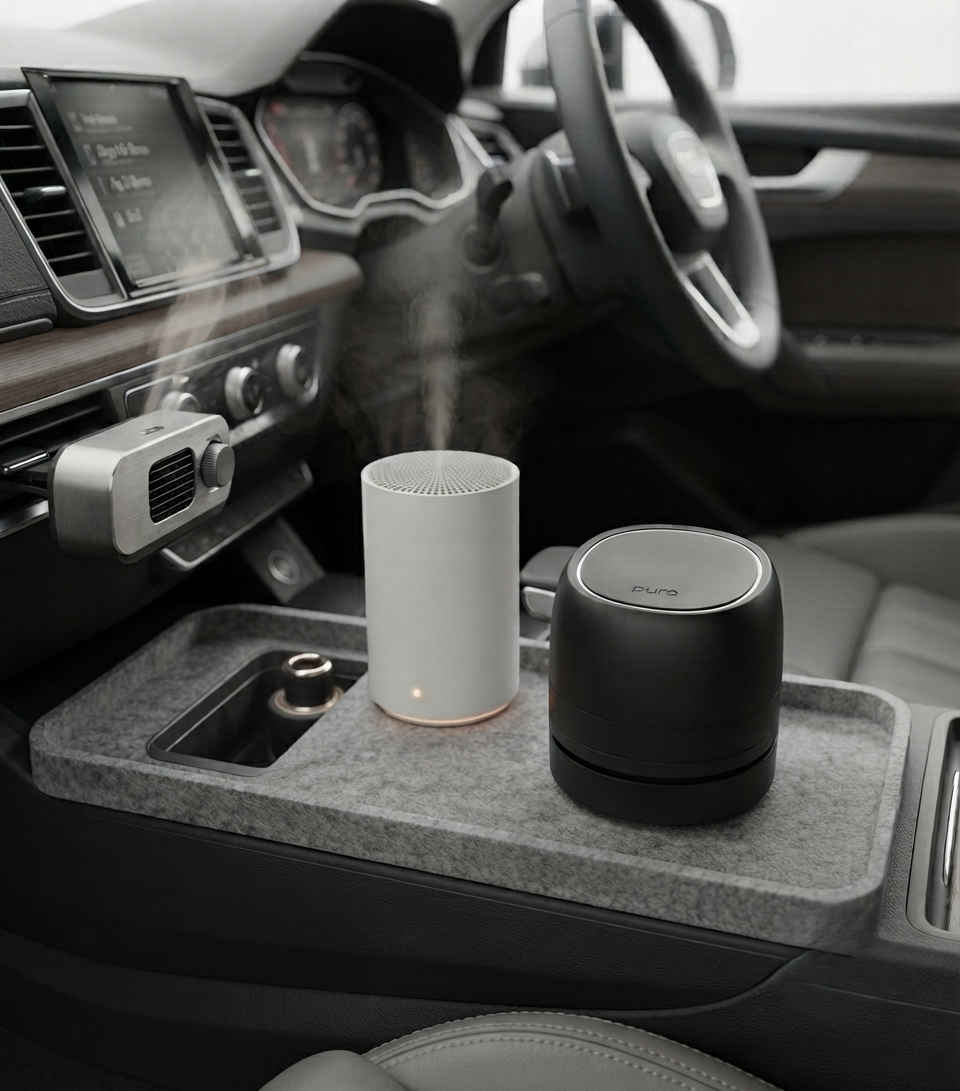
Not all car diffusers work the same way, and understanding the differences can save you from buying the wrong product for your needs. In the vent clip vs plug-in vs smart diffuser comparison, each type uses a different method to distribute fragrance, which directly affects performance, cost, and convenience.
This guide breaks down exactly how each one works, where it excels, and which type makes the most sense for your driving habits and budget.
Key Takeaways
- Vent clips are the cheapest and simplest option but depend entirely on your car’s airflow to work.
- Plug-in diffusers offer consistent output using your car’s 12V outlet without needing an app.
- Smart diffusers provide the most control and consistency but cost significantly more upfront.
- Airflow dependency is the biggest performance difference between vent clips and the other two types.
- Your ideal choice depends on driving frequency, budget, and how much control you want over scent settings.
How Each Diffuser Type Works
Before comparing performance, it helps to understand the basic mechanism behind each option in the vent clip vs plug-in vs smart diffuser debate:
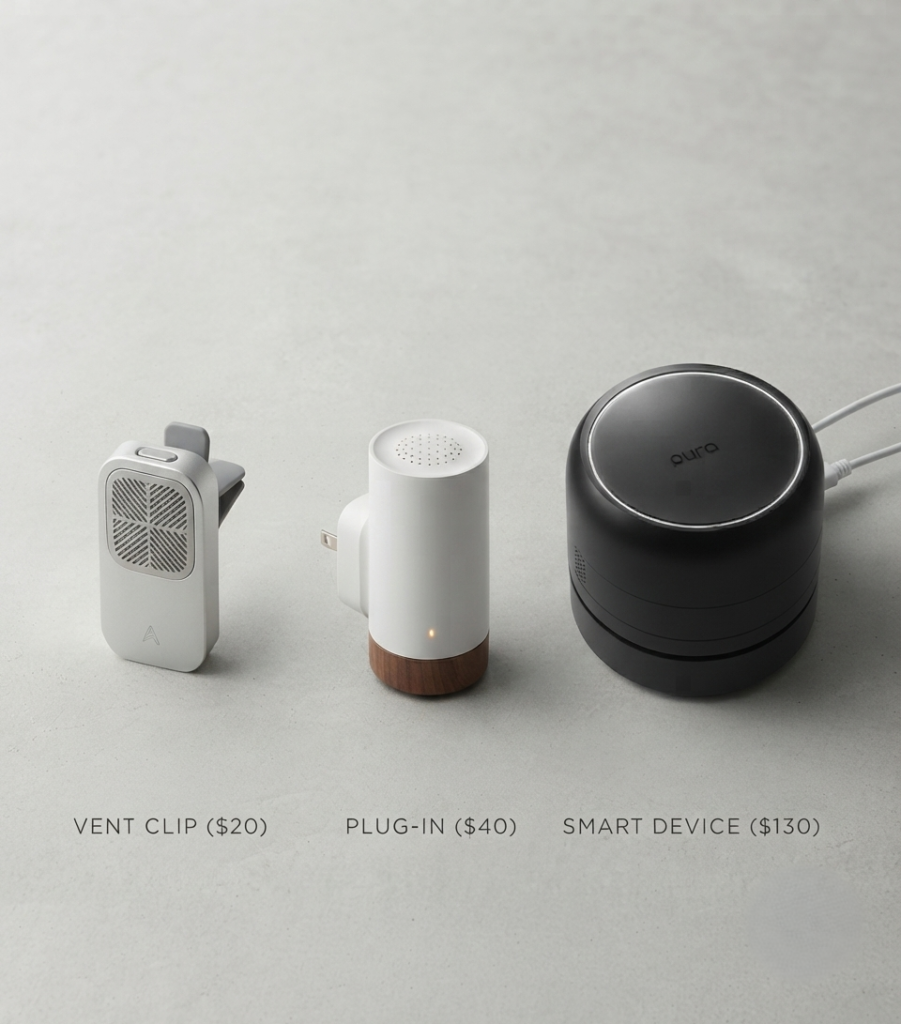
- Vent clips hold a scented pad, gel, or cartridge that relies on natural airflow from your car’s vents to spread fragrance passively.
- Plug-in diffusers connect to your car’s 12V power outlet and use gentle heat or a small fan to actively disperse fragrance oil.
- Smart diffusers use a battery-powered motor paired with a companion app, allowing precise control over intensity, scheduling, and fragrance switching.
Scent Performance Comparison
Performance varies significantly across all three types:
| Diffuser Type | Scent Consistency | Airflow Dependent? | Intensity Control |
|---|---|---|---|
| Vent Clip | Low–Moderate | Yes | None |
| Plug-In | Moderate–High | No | Limited (some models) |
| Smart Diffuser | High | No | Full (app-based) |
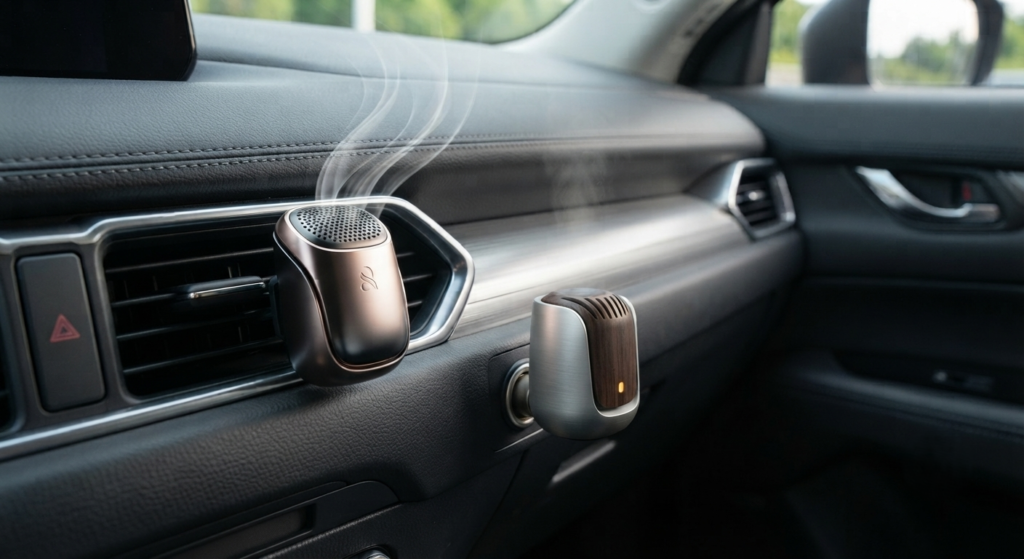
Vent clips are the most affected by driving conditions — fan speed, open windows, and vent direction all impact how much scent you actually notice. Plug-in and smart diffusers both operate independently of your car’s airflow, giving more predictable results.
Cost Comparison: Upfront and Long-Term
Budget is often the deciding factor in the vent clip vs plug-in vs smart diffuser decision, so here’s how they stack up:
- Vent clips: Lowest upfront cost, but shortest lifespan (roughly 7–14 days), meaning frequent repurchasing.
- Plug-in diffusers: Mid-range upfront cost with moderate refill frequency (roughly 20–30 days per fragrance oil bottle).
- Smart diffusers: Highest upfront cost, but longest cartridge lifespan (roughly 30–45 days), which can narrow the long-term cost gap for daily users.
Ease of Use and Setup
- Vent clips require zero setup — clip it on and you’re done.
- Plug-in diffusers need to be plugged into your 12V outlet, which may compete with phone chargers or other accessories depending on your car’s outlet count.
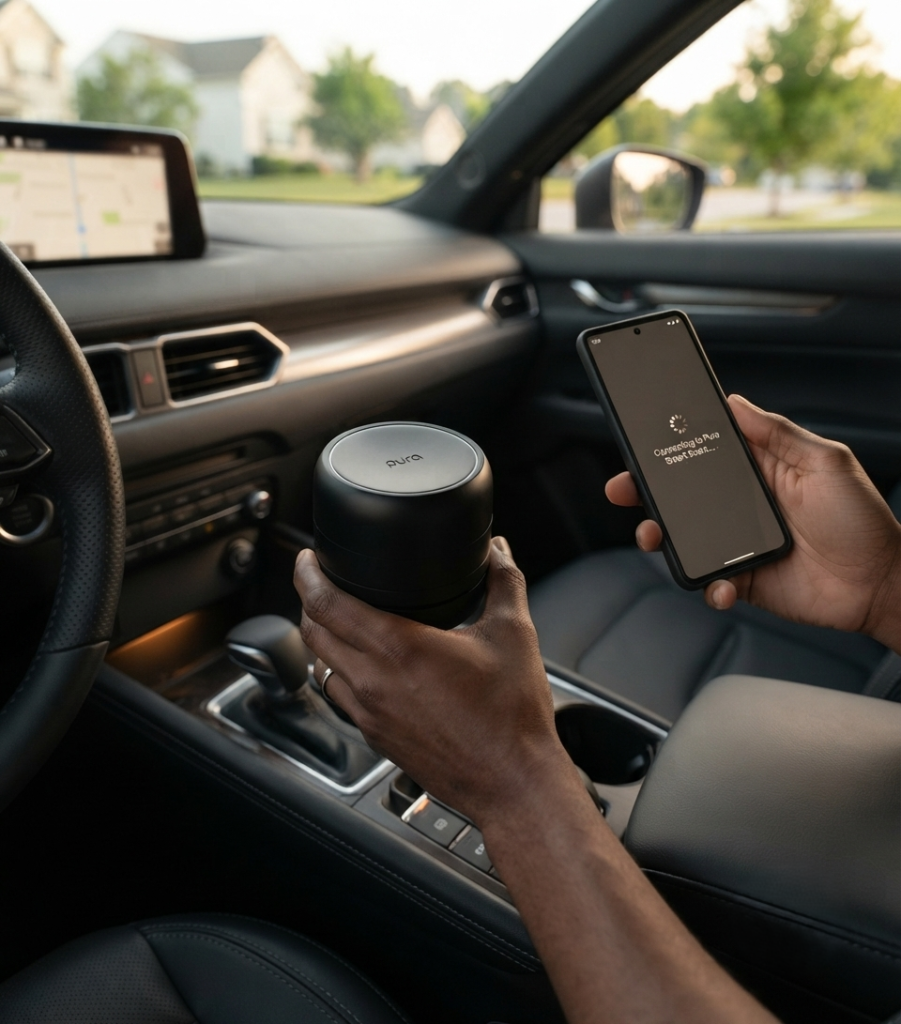
- Smart diffusers require initial app pairing and occasional charging, adding a small learning curve but offering the most long-term flexibility once set up.
Which One Fits Your Driving Habits?
Choose a Vent Clip If:
- You want the cheapest possible option
- You drive occasionally and don’t mind frequent replacement
- You prefer zero setup or maintenance
Choose a Plug-In Diffuser If:
- You want consistent scent without relying on car airflow
- You don’t need app-based customization
- You have a spare 12V outlet available
Choose a Smart Diffuser If:
- You drive daily and want long-term consistency
- You value adjustable intensity and scheduling
- You’re comfortable paying more upfront for better control
Durability and Vehicle Fit Considerations
One often-overlooked factor in the vent clip vs plug-in vs smart diffuser comparison is how each type interacts with your vehicle’s design:
- Vent clips can restrict airflow from the vent they’re attached to, which matters more in extreme weather.
- Plug-in diffusers take up your 12V outlet, which may be a limitation in older vehicles with only one outlet.
- Smart diffusers typically mount via adhesive to the dash, avoiding both airflow restriction and outlet competition.
Final Verdict
There’s no universal winner in the vent clip vs plug-in vs smart diffuser comparison — the right choice depends entirely on your priorities. Vent clips remain the most budget-friendly and low-commitment option, plug-in diffusers offer a solid middle ground with consistent performance and no app required, and smart diffusers deliver the best long-term consistency and control for daily drivers willing to invest more upfront.
Think about how often you drive, how much control you want over scent intensity, and your available budget before deciding — matching the diffuser type to your actual habits will always outperform simply picking the most popular option.
Frequently Asked Questions
Is a plug-in diffuser better than a vent clip? Generally yes, since plug-in diffusers don’t depend on airflow and offer more consistent scent output than passive vent clips.
Are smart diffusers worth the extra cost compared to vent clips? For daily drivers who want consistency and control, yes. Occasional drivers may find a vent clip sufficiently effective for a much lower cost.
Do plug-in diffusers drain my car battery? No, plug-in diffusers draw minimal power through the 12V outlet and won’t meaningfully affect your car battery during normal use.
Which diffuser type lasts the longest? Smart diffusers typically offer the longest cartridge lifespan, averaging 30–45 days compared to 7–30 days for vent clips and plug-in options.
Can I use a vent clip and a plug-in diffuser together? It’s possible, but combining two fragrance sources can create an overpowering or clashing scent, so it’s usually better to choose one primary system.