

We use car diffusers to improve the air quality inside our vehicles, creating a pleasant and relaxing commute. However, when we introduce active diffusion of essential oils into a small, enclosed space, we must prioritize the safety of our most vulnerable passengers: our pets and children.
The short answer is yes, they can be safe, but only with significant precautions and proper oil selection.
What is safe for an adult can be overwhelming or even toxic for a small child or animal. This guide breaks down the essential safety data, providing lists of oils to use, oils to avoid, and the protocol for maintaining a healthy cabin environment for your entire family.
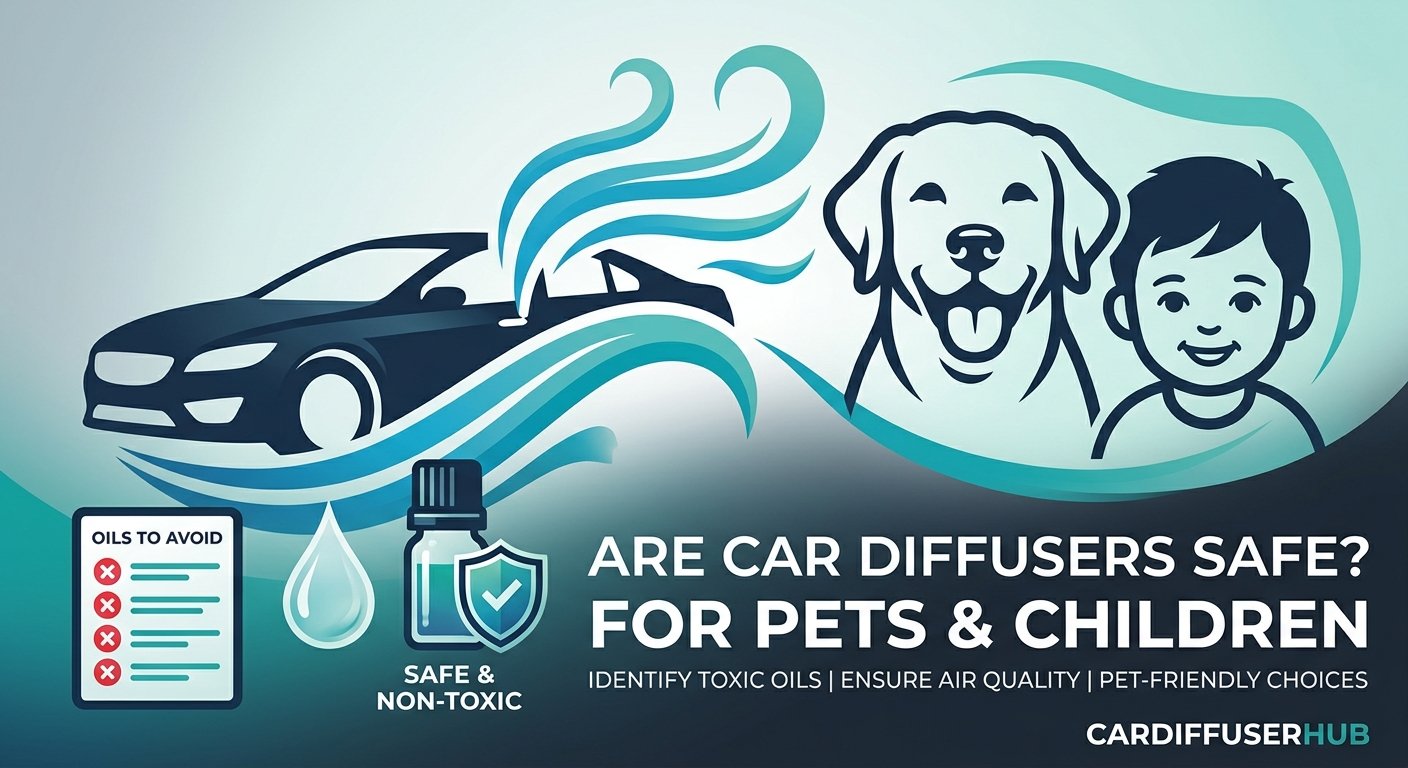
Featured Safety Graphic: Protect Your Passengers
Before you diffuse, visualize who you are protecting:
IMAGE CAPTION: Our primary mission at Cardiffuserhub.com is passenger well-being. This graphic illustrates how we evaluate oil toxicity and air quality to ensure that the scent plumes interacting with your family are 100% safe and non-toxic.
The Core Safety Concern: Why the Car is Different
A car is not a living room. It is a tiny, sealed capsule. This means:
- Concentration: Scent concentration builds up very rapidly. A few drops that provide a gentle aroma at home can become overwhelming and irritating in a vehicle.
- Ventilation: Unless windows are down, ventilation is limited, recirculating the same air and oil molecules.
- Proximity: Pets and car seats often place passengers directly in the path of the diffuser’s mist.
Essential Safety Data for Pets (Specifically Dogs and Cats)
Pets, especially cats, have sensitive respiratory systems and, more importantly, their livers lack the specific enzymes needed to process many common essential oil compounds. When they inhale or ingest these oils (by grooming themselves after the mist settles on their fur), it can lead to acute toxicity.
TOXIC OILS: Never Diffuse These in a Car with Pets
This is not an exhaustive list, but these common oils are highly toxic to dogs and/or cats:
- Tea Tree (Melaleuca): Extremely toxic; even small amounts can cause paralysis or death.
- Peppermint/Spearmint: Contains phenols cats cannot process; a strong respiratory irritant.
- Eucalyptus: Toxic to both; causes drooling, vomiting, and lethargy.
- Cinnamon (and Cassia): Causes liver and kidney damage in cats.
- Citrus Oils (Lemon, Orange, Grapefruit): High levels of d-limonene can cause liver failure in cats. Small, highly diluted amounts may be tolerated by some dogs, but are risky for cats.
- Pine, Ylang Ylang, Wintergreen, Clove.
PET-FRIENDLY CHOICES (When Highly Diluted)
These oils are generally considered safer for dogs (and some cats), but all oils should be used with massive dilution:
- Lavender: Very calm and generally tolerated.
- Frankincense: Supportive and usually safe.
- Cedarwood: Can be calming for anxiety.
- Chamomile (Roman or German).
Essential Safety Data for Children (Infants and Toddlers)
Children’s livers are also still developing, and their smaller body mass means they reach toxic thresholds much faster than adults. Respiratory irritation is the main concern.
OILS TO AVOID: Risks for Young Children
- Eucalyptus & Peppermint: Both contain compounds (eucalyptol and menthol) that can slow or, in rare cases, stop breathing in infants and very young children. Avoid these near children under 3-6 years old.
- Wintergreen: Contains methyl salicylate, which can be toxic.
- Oregano, Clove, Cinnamon: These “hot” oils are severe skin and mucous membrane irritants.
SAFE CHOICES FOR CHILDREN (Ages 2+)
- Lavender: The gold standard for calming children during travel.
- Frankincense.
- Sweet Orange (highly diluted).
The Safe-Drive Protocol: How to Diffuse Responsibility
If you choose to diffuse with vulnerable passengers, you must follow this 4-step protocol:
- Massive Dilution: If a recipe calls for 4-5 drops at home, use 1 or 2 drops total in your car diffuser.
- Ventilation is Key: Always crack a window, or ensure your car’s ventilation is pulling in Fresh Air rather than using Recirculate.
- Use Intermittent Mode: Run the diffuser for 10-15 minutes, then turn it off for 30 minutes. Do not diffuse continuously.
- Observe Your Passengers: Watch for negative reactions.
- In Pets: Excessive drooling, watering eyes, sneezing, vomiting, lethargy, or trouble walking.
- In Children: Coughing, wheezing, sneezing, skin redness, or unusual fussiness.
- If you observe these signs, turn off the diffuser immediately, open all windows, and seek fresh air or medical/veterinary attention.